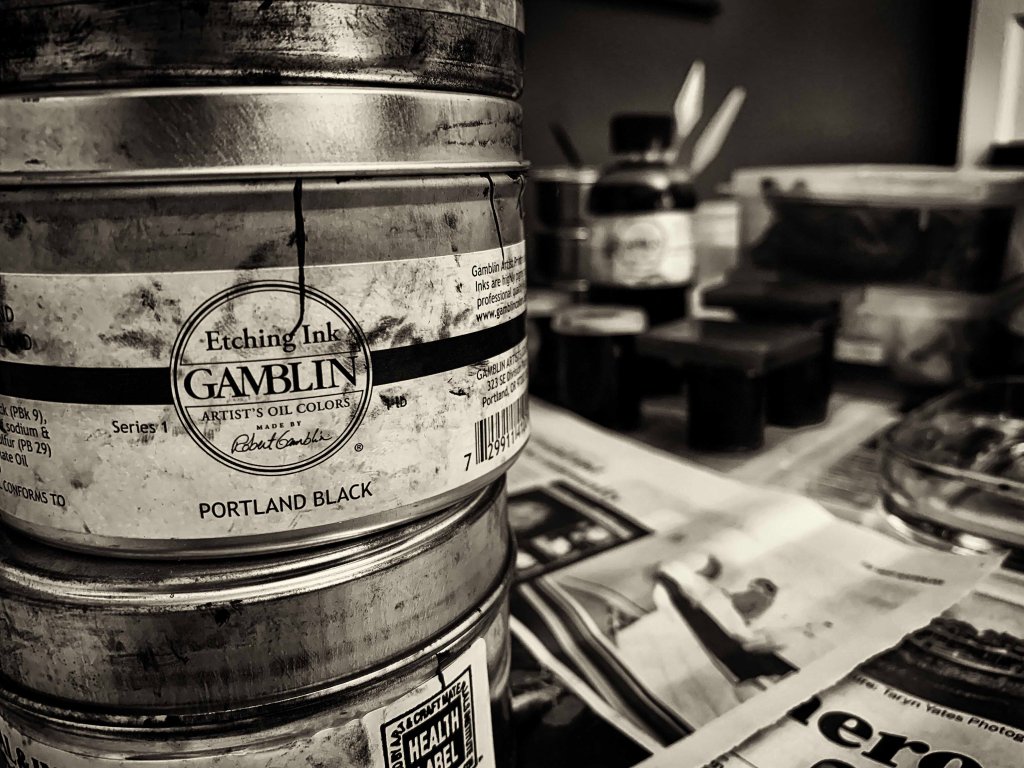
The intaglio printing process is highly technical and process driven. Artists must be very methodical and work in “reverse” method, both literally and figuratively, as the final print is a result of reworking what is left rather than adding onto something. All imagery and text must also be produced in a mirror image of the final result required as the final print will be the mirror reverse of the plate image.
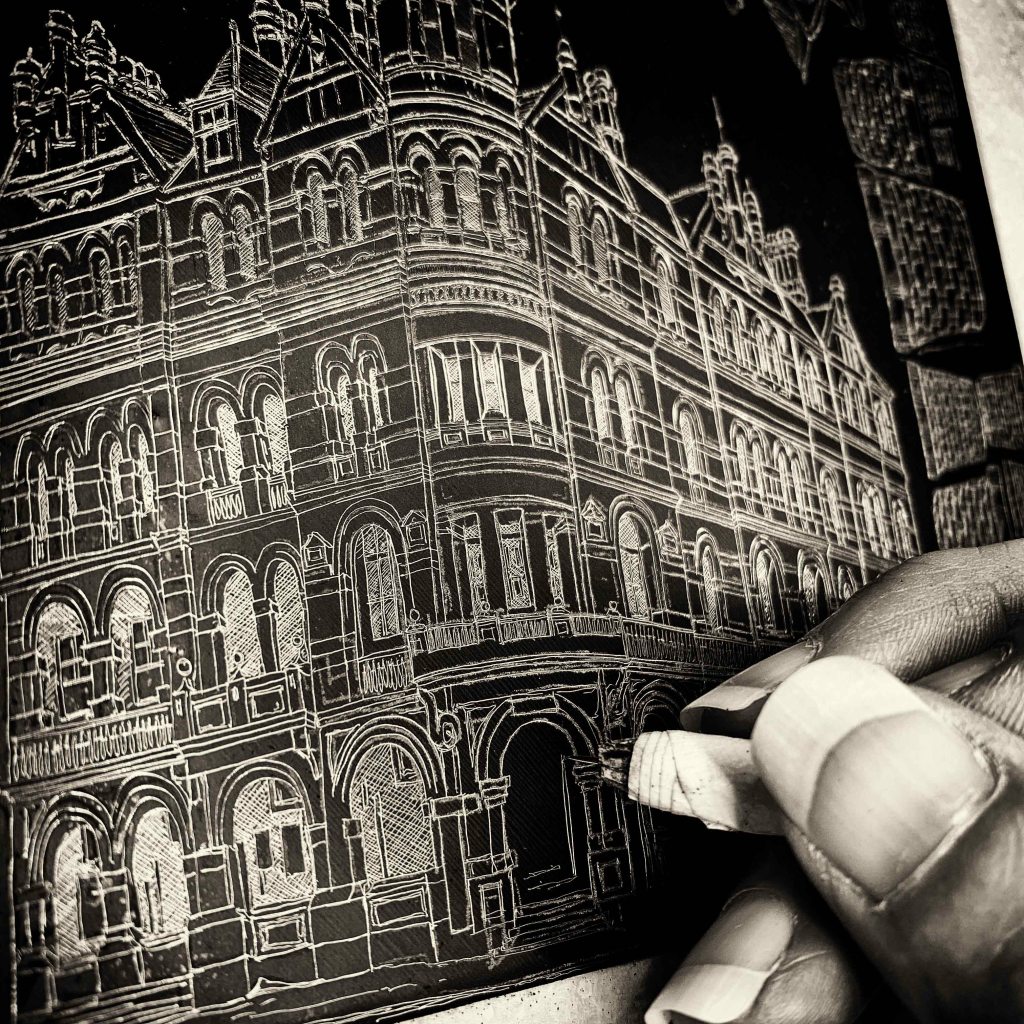
Copper Plates are etched using two distinctly different methods, one which produces the fine linework of the print and one which creates the tonal details, a technique called Aquatint.
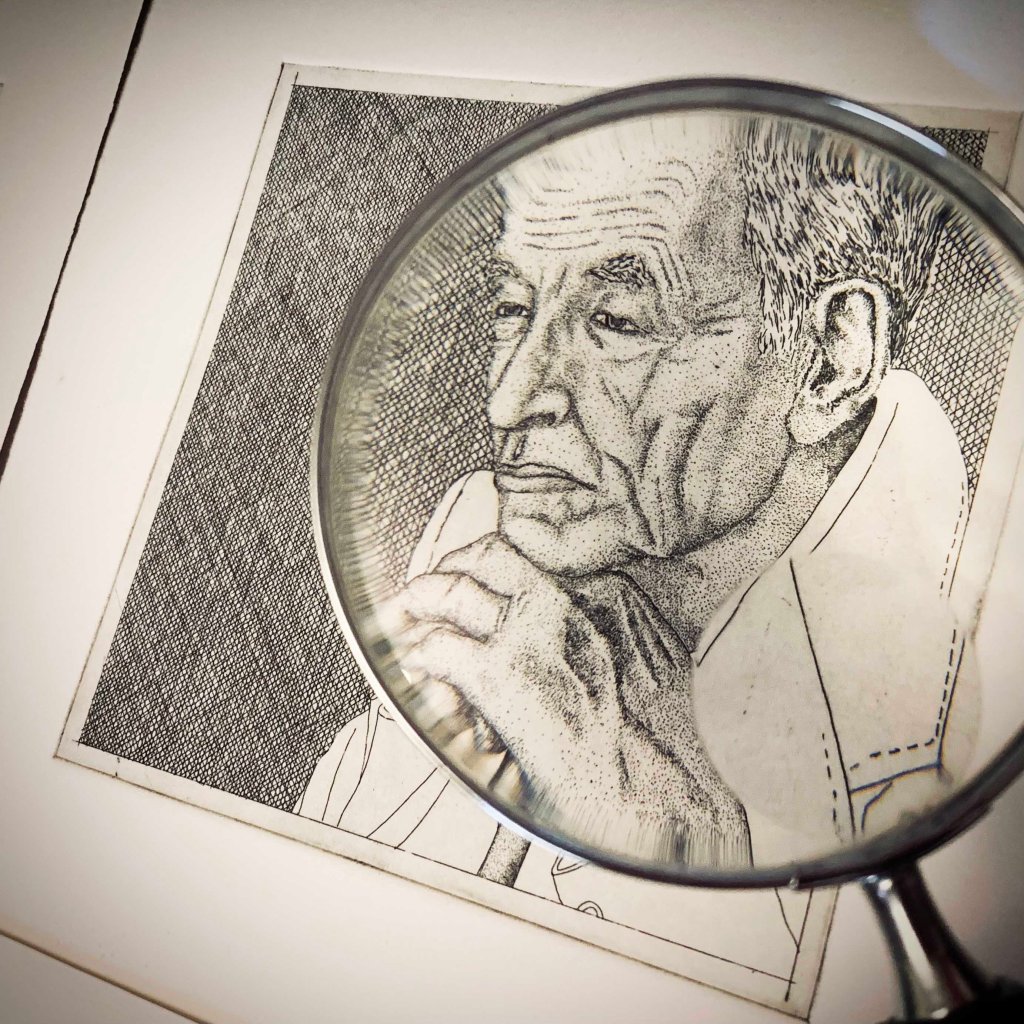
For the linework, the drawing is transferred onto the prepared plate. This is then hand-scribed into the prepared plate, exposing the copper metal. Once the plate is etched in acid this results in a plate with linework only but any tonal areas would have been created only by multiple lines close together or stipple.
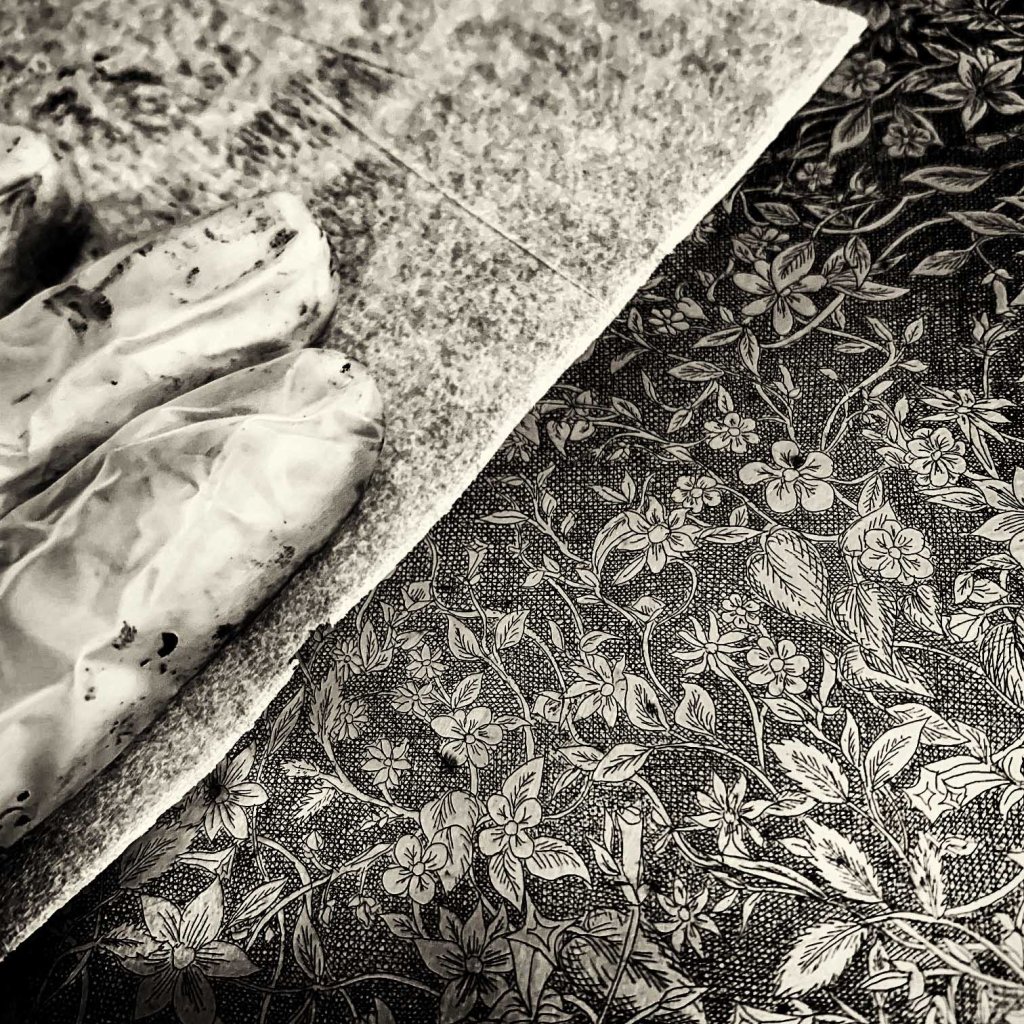
To create various shades of tonal detail an Aquatint method can be applied to the copper plate. Working in reverse order the areas of the plate to remain white are blocked out by hand and the plate is then etched for a short amount of time. This process is repeated several times depending on how many tones are required in the final artwork.
Every single print is pulled by hand in my studio. This is the only way to preserve the authenticity of the techniques of this traditional art of printing. As each print is individually inked and pulled only once, the results always vary minutely and each print, whilst part of an edition run, is unique.
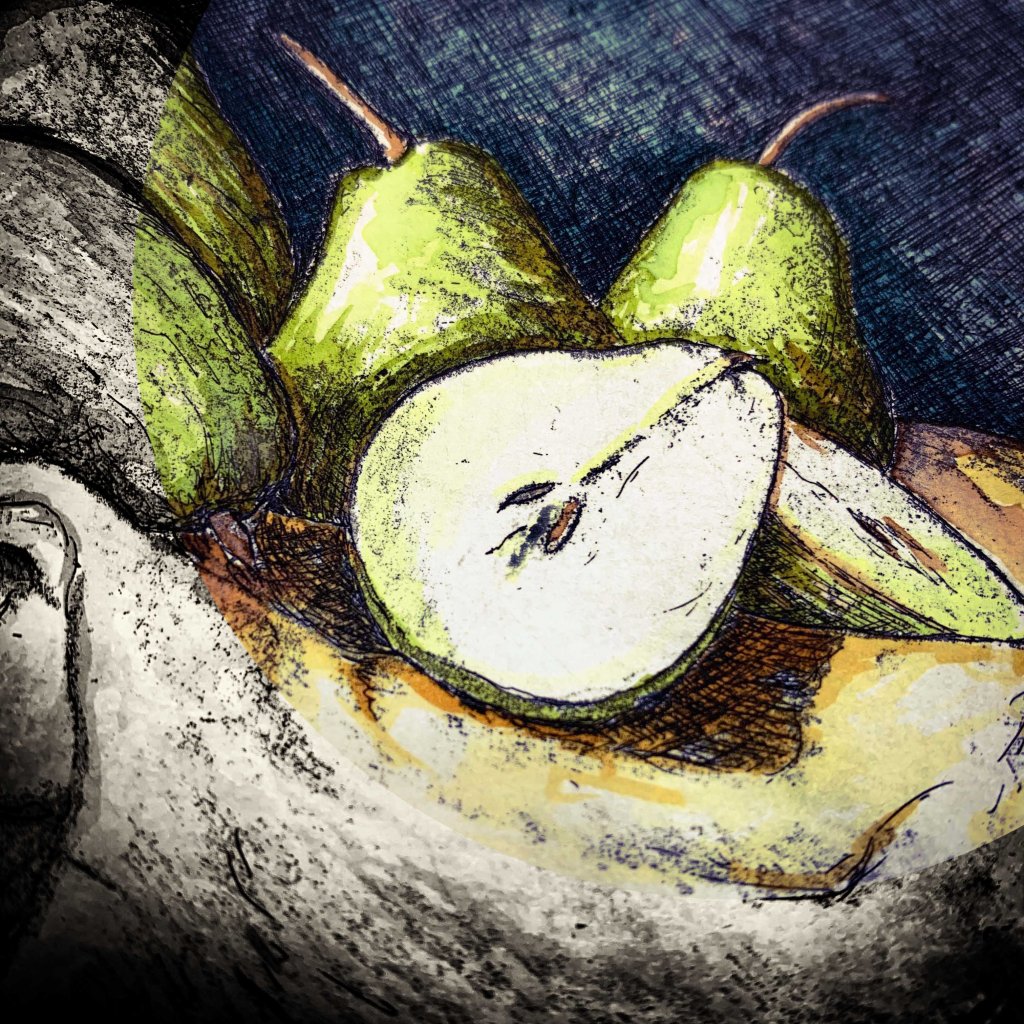
Prints may be coloured by hand with watercolours, carefully applied with a brush, or have hand stitching applied.

